
Best countries to start with
Start with a major power such as China or the United States: more cities, more income and more room for mistakes. Small nations research technology far more cheaply, but a small country sitting next to a major power is the worst start in the game.
Your first country choice decides whether Control Europe teaches you the game or simply deletes you from it. Two numbers govern the decision — how many cities you hold, and how expensive your tech is — and almost everything else follows from them.
The two numbers that decide it
- How many cities you own. Every city pays money, manpower and a troop spawn point. More cities means more of all three, plus more room to lose one without falling apart.
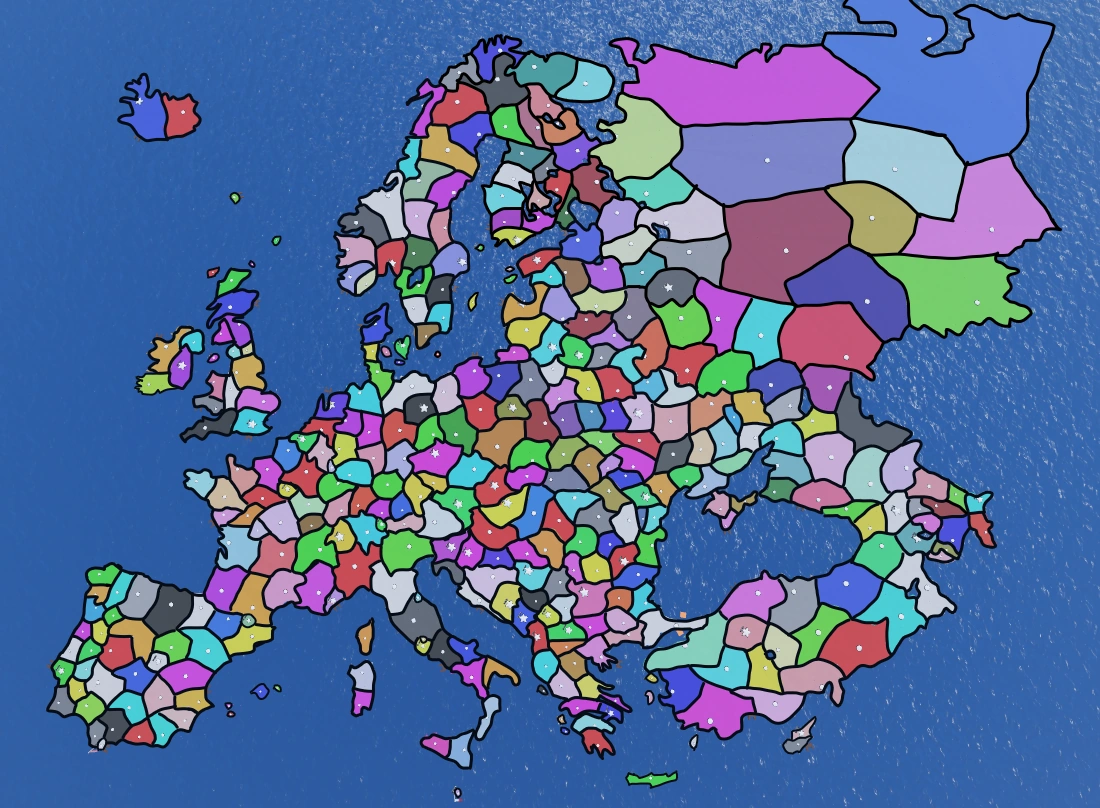
- How expensive your tech is. Research is priced against the size of your country: the bigger the country, the more expensive every technology. The wiki's own comparison runs from San Marino at the cheap end to the USA at the expensive end.
Ports, airports and neighbours matter only because they protect or exploit those two numbers.
| Factor | Large country | Small country |
|---|---|---|
| Cities | Many, so income and spawn points are spread around | Few, so each city is load-bearing |
| Money | More taxable cities, more slack | One lost war and the budget collapses |
| Manpower cap | 2% of a large population | 2% of a small population |
| Tech cost | Rises with country size | The cheapest in the game |
| Losing a city | Annoying, recoverable | Often fatal — occupied cities cannot spawn troops |
| Best for | First games, long campaigns | Tech rushing, surgical wars |
Big countries: China, the USA, room to breathe
Where size pays off
Large countries are the standard recommendation for a first match, and the mechanics back it up.
- Income scales with cities. Money comes from taxes, and tax is collected per city. A large roster of cities means a fatter baseline income before you have done anything clever.
- Manpower scales with population. Everyone opens the server with the same 60,000 manpower, but the cap is 2% of your population and normal daily growth is +0.014% of population. A big population therefore refills faster and to a much higher ceiling.
- Rebuilding scales with spawn points. Troops come out of cities, and an occupied city cannot produce troops at all. With many cities, losing a border town does not stop you fielding an army.
- Mistakes are absorbable. With 14 players per server, a large country can trade a province, absorb the hit and keep playing instead of restarting.
The bill arrives in the tech tree: research gets more expensive as the country grows, so a giant will reach the advanced units later than a clever small neighbour. Big countries buy safety with time.
Small countries: cheap tech, thin margins
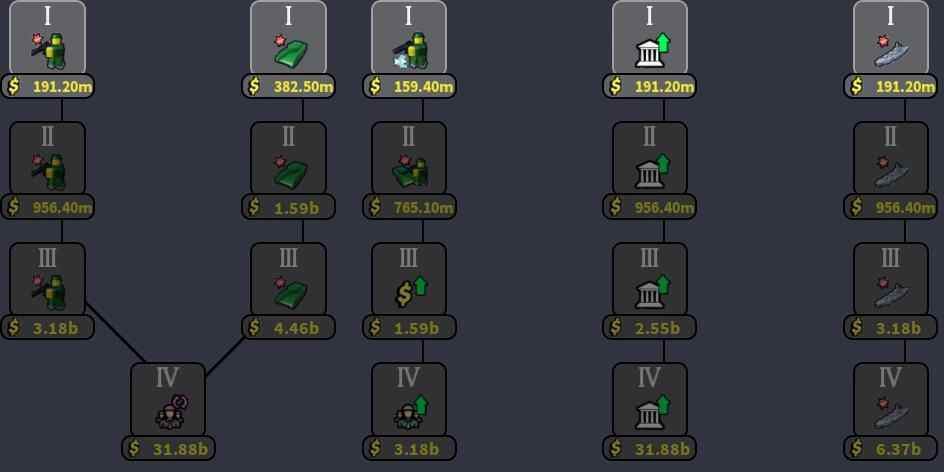
The other half of the tradeoff is that small countries buy technology with risk. Research costing far less — San Marino against the USA is the wiki's example of the spread — means the five research-gated units (Planes, Anti Aircraft, Missile Launcher, Artillery, Aircraft Carriers) come online sooner than a big rival can field them. Research also pushes manpower up, so climbing the tree grows your pool as well as your roster.
The defensive escape hatch
The margins are brutal, though. A small population means a small manpower cap, a handful of cities means a handful of spawn points, and a single occupied capital means you can no longer rebuild at all. What a small country does have is defense: city defense runs to 10 (X), and maxed defense plus artillery can wipe out a force under a million men. Attackers who never bring missiles or planes to break that defense bar will grind themselves flat against it.
Where first games actually go wrong
Do not spawn beside a giant
Picking a small country next to a large one. This is the most common way to lose before the ten-minute mark. Attack speed is troop count + tech + attacking from several sides, and two or more ground armies arriving from different directions wreck whatever they catch. A large neighbour has the numbers to surround you and the cities to replace losses; you have neither. If your city falls, its spawn point falls with it, and occupied cities produce nothing.
Check the map, not the flag
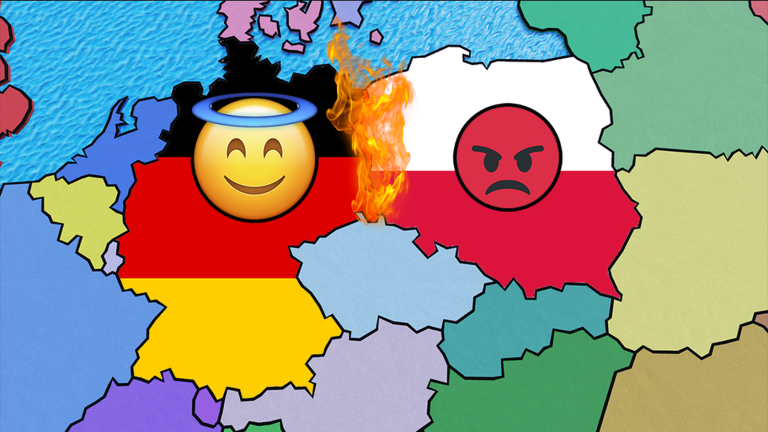
Geography mistakes. Someone will tell you Germany is in Africa. It is in Europe. Do not pick from the flag row out of memory — check the map: who actually shares your border, whether you have a port (ships need one), and whether your capital can host an airport (airports exist only on capitals, so no capital means no air force).
Confusing the two maps. A war goal costs 17 Political Power on the world map but 50 on the Europe map, and the official description starts you as a modern European country. Doing your PP maths for the wrong map means arriving at a war you cannot afford to declare — declaring itself already costs 10 PP out of a 500 cap that refills at 0.25 per day.
Ignoring what occupation gives you. A captured city pays lower tax, cannot spawn troops, still counts as territory and still trickles a little manpower, but it cannot be ceded and can only be annexed at peace. Taking more than you can hold leaves you with a bigger map and a smaller army.
Who should pick what
Quick reference by playstyle
| Player type | Pick | Why |
|---|---|---|
| Playing their first match | A large country such as China or the USA in scale | Many cities means money, manpower and spawn points spread across the board; one bad war is survivable |
| Tech racer | The smallest country they can stand to play (San Marino is the wiki's example) | Tech is priced by country size, so small nations climb the tree far faster |
| Defensive player | A country they can push to defense X | Maxed defense plus artillery deletes sub-1M forces, and infantry-only attackers bleed |
| Navy or air plans | A country with port cities and a usable capital | Ships need ports, and airports exist only on capitals |
| Diplomat first, conqueror second | A country with neighbours worth allying | Creating an alliance costs 50 PP, joining costs 30, and allied troops cross your land without taking damage |
| Formable hunter | Whose formable's cities they can realistically hold | You must control every city of a formable, and some demand 40-60 medals or a win requirement first |
| Aggressor | Big enough to out-sustain a war of attrition | War costs 10 PP plus a 17 or 50 PP war goal, and occupied cities produce nothing while you consolidate |
Whichever you take, decide it from the map and the two numbers above, not from the flag you like the look of.
Related guides
- How to play — controls, first-hour rhythm and the basics on one page.
- Best countries — this page: how to choose a first nation.
- Formables — the 151 unique formables and what each one demands.
- Military units — all eight unit types, their costs and their counters.
- Cities and economy — tiers, defense ratings and the money loop in depth.
- Alliances and war — diplomacy, war goals, treasuries and betrayal timing.
- Codes — why there is no redeem box and what the current status is.